Ford Mustang II Evolution
The Ford Mustang II Evolution
The Ford Mustang II Evolution


|
|
||||||||||||||||||||||||||||||||||
|
Click HERE for current price guide. |
|
|
|||||||||||||||||||||||||||||||||||||||||||||||||||||||||||||||||||||||||||||||||||||||||||||||||||||||||||||||||||||||||||||||||||||||||||||||||||||||
| Paint colors are for reference purposes only. Due to the constraints of browsers, the examples shown here may vary from the original car paint color. |
||||||
 Silver Metallic 1G |
 Bright Red 2B |
 Medium Red 2M |
 Light Blue 3B |
 Bright Blue Metallic 3E |
 Light Grabber Blue 3N |
|
 Bright Green Gold Metallic 4B |
 Medium Ivy Bronze Metallic 4T |
 Dark Yellow Green Metallic 4V |
 Medium Lime Yellow 4W |
 Dark Ginger Metallic 5J |
 Medium Chestnut Metallic 5M |
|
 Saddle Bronze Metallic 5T |
 Tan Metallic 5U |
 Medium Goldenrod 6C |
 White Decor 9C |
|||
|
|
||||||
| 6 | 5 | 4 | 3 | 2 | 1 | |
| 1974 Mustang II | ||||||
| Four Cylinder | ||||||
| 2-dr Hardtop Coupe | 300 | 600 | 950 | 1900 | 3200 | 4600 |
| 3-dr 2+2 | 300 | 650 | 1100 | 2100 | 3600 | 5100 |
| 2-dr Ghia | 300 | 650 | 1000 | 2000 | 3500 | 4900 |
| Six Cylinder | ||||||
| 2-dr Hardtop Coupe | 300 | 650 | 1000 | 2000 | 3500 | 4900 |
| 3-dr 2+2 | 300 | 650 | 1100 | 2200 | 3800 | 5400 |
| 2-dr Ghia | 300 | 650 | 1100 | 2100 | 3600 | 5100 |
| 3-dr Mach 1 | 300 | 700 | 1200 | 2400 | 4100 | 5900 |
| Trim patterns are for reference purposes only. Due to the constraints of browsers, the examples shown here may vary from the original manufacturer’s specifications. |
||||||
|
Std w/Black — AV |
Standard — AA |
Standard — AB |
Standard — AG |
Standard — AU |
Luxury — EA |
|
|
Luxury — BB |
Luxury — BD |
Luxury — BG |
Luxury — BP |
Luxury — BU |
||
|
Standard — DA |
Standard — DB |
Standard — DD |
Standard — DG |
Standard — DU |
Luxury — CB |
|
|
Luxury — CD |
Luxury — CG |
Luxury — CU |
||||


|
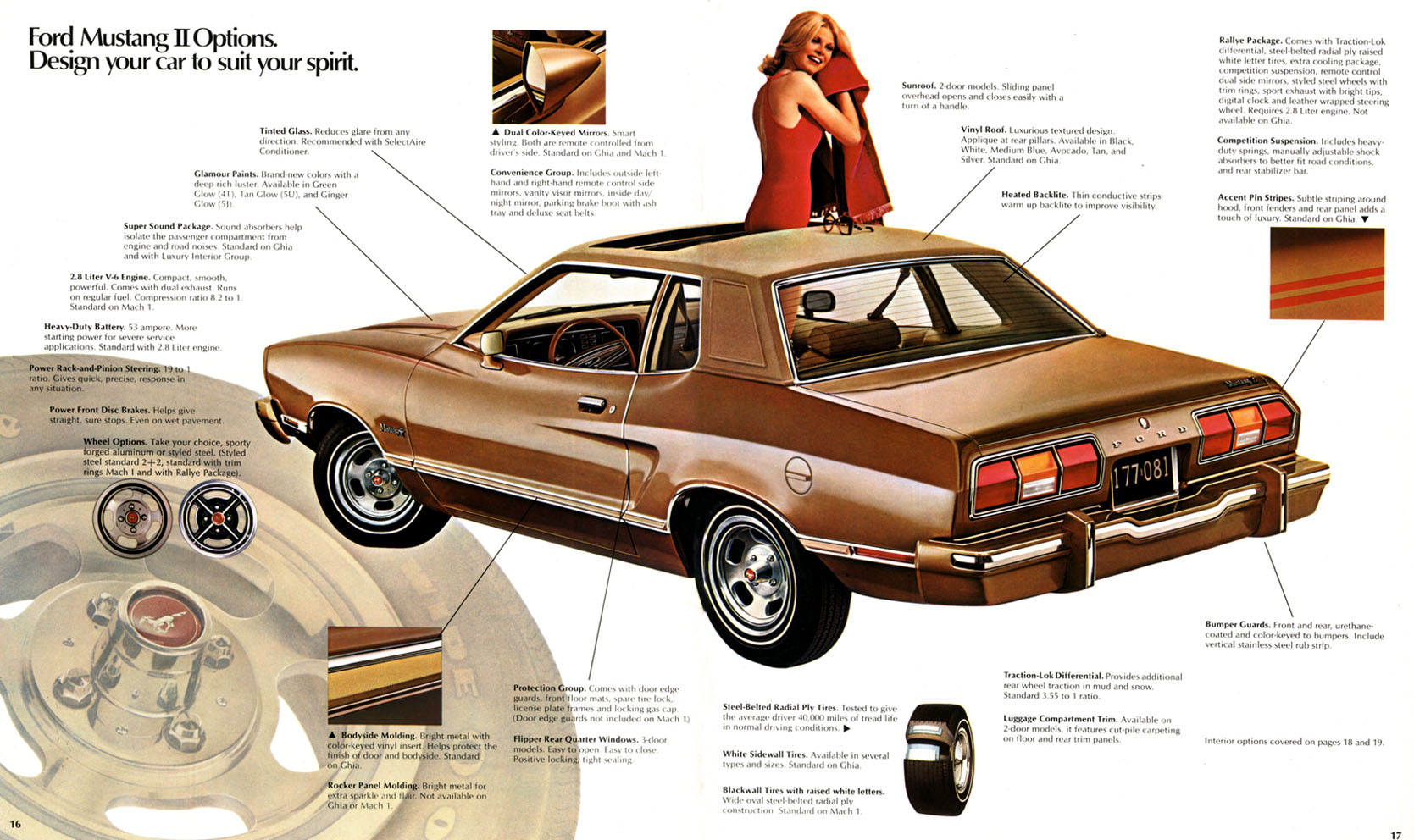
The most changed car in the auto industry for 1974 is Mustang II, a small, sporty and luxurious car that Ford expects to be the forerunner of a new class. |
|